




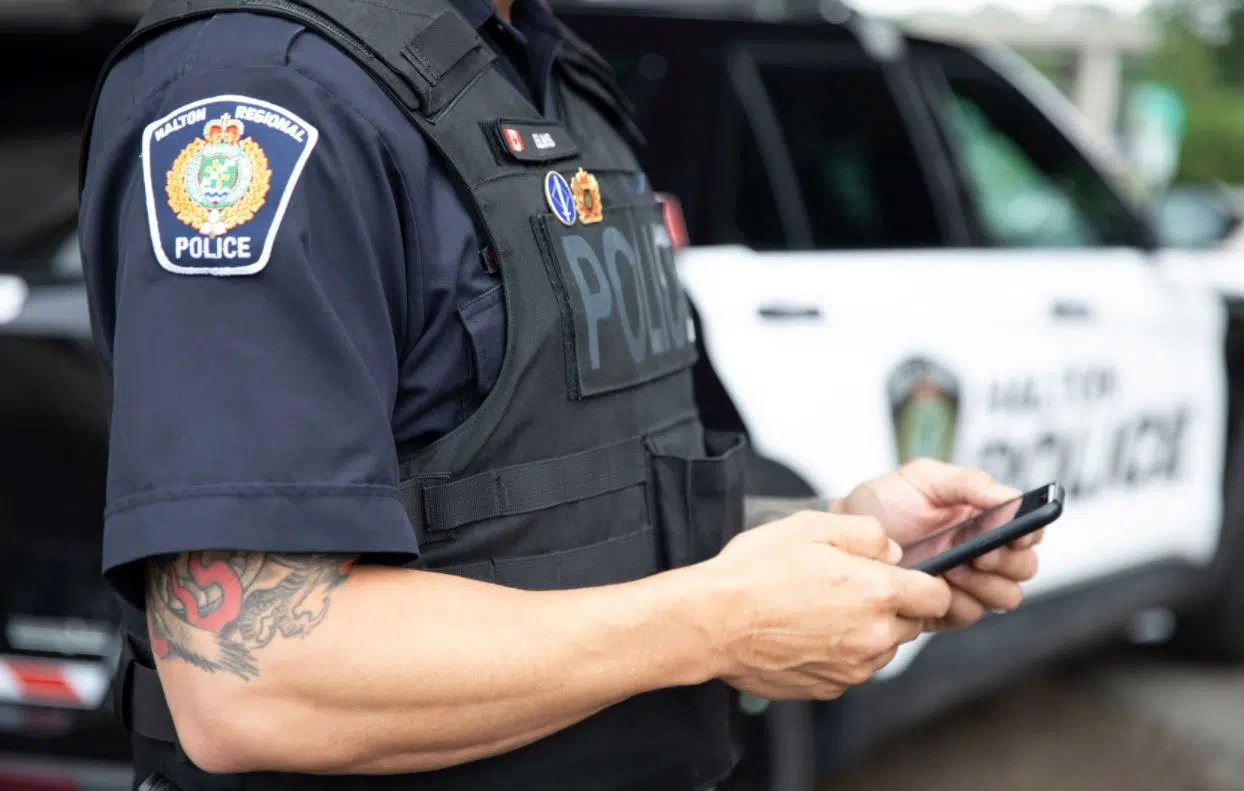
Photo: Halton Police
What role does cryptocurrency play in fraud cases?
March has been Fraud Awareness Month. We spoke with Detective Constable Derek Gray with the Halton Regional Police Service (HRPS) Elder Abuse and Financial Crime unit. He dives into why things like Bitcoin are so desired by scammers.
READ: How scammers are impersonating banks to steal your money
Detective Gray says Bitcoin can be seen as a fun, yet volatile, investment. But major companies and organizations won’t require you to make payments using the cryptocurrency.
He also warns that the volatility of cryptocurrency can make trading things like Bitcoin and Dogecoin feel like gambling. He wants residents to know their limits and not spend money they need on them.
The HRPS is also doing a lot for residents to help protect them from fraud. Detective Gray recommends that residents check out the The Little Black Book of Scams. The free resource dives deep into each and every scam that police in Canada have come across.
Another resource that residents in and around Milton can check out is the exchange zones. While services like Kijiji and Facebook Marketplace make it easier to find used items you need at low prices, there is the risk of the transaction turning negative quickly.
READ: Tinder Swindler? It could happen to anyone – Covering the romance scam with the Halton Police
The zones allow residents to safely buy and sell items through sites like Facebook Marketplace.
The following are tips to protect yourself from emergency scams:
- If you suspect that you are being contacted by a fraudster call Halton Police at 905-825-4777 or 911 if it is an emergency.
- If you are at the bank, do not lie—tell the bank employee why you are retrieving the cash. The employees are trained to assist you in recognizing possible frauds and will help protect your money.
- Remember: Scammers count on the fact that victims will want to act quickly to help their loved one in an emergency.
- Caution: Never give money to anyone you don’t know and trust. Verify the person’s identity before you take any steps to help.
- Think: Don’t give out any personal information to the caller.
- Investigate: Ask the person questions that only your loved one would be able to answer. Call someone you both know to verify the story. Scammers can learn a lot about you from social media, or while talking to you on the phone.
- Ask yourself: Does the caller’s story make sense?
- Important: Police, lawyers and the court will never ask you to give money to someone at your door.
Anyone with information pertaining to a fraud or any other crime is asked to contact the Regional Fraud Bureau Intake Office at 905-465-8741 or Fraud@haltonpolice.ca.
Tips can also be submitted anonymously to Crime Stoppers. “See something? Hear something? Know something? Contact Crime Stoppers” at 1-800-222-8477 (TIPS) or through the web at www.haltoncrimestoppers.ca.



