




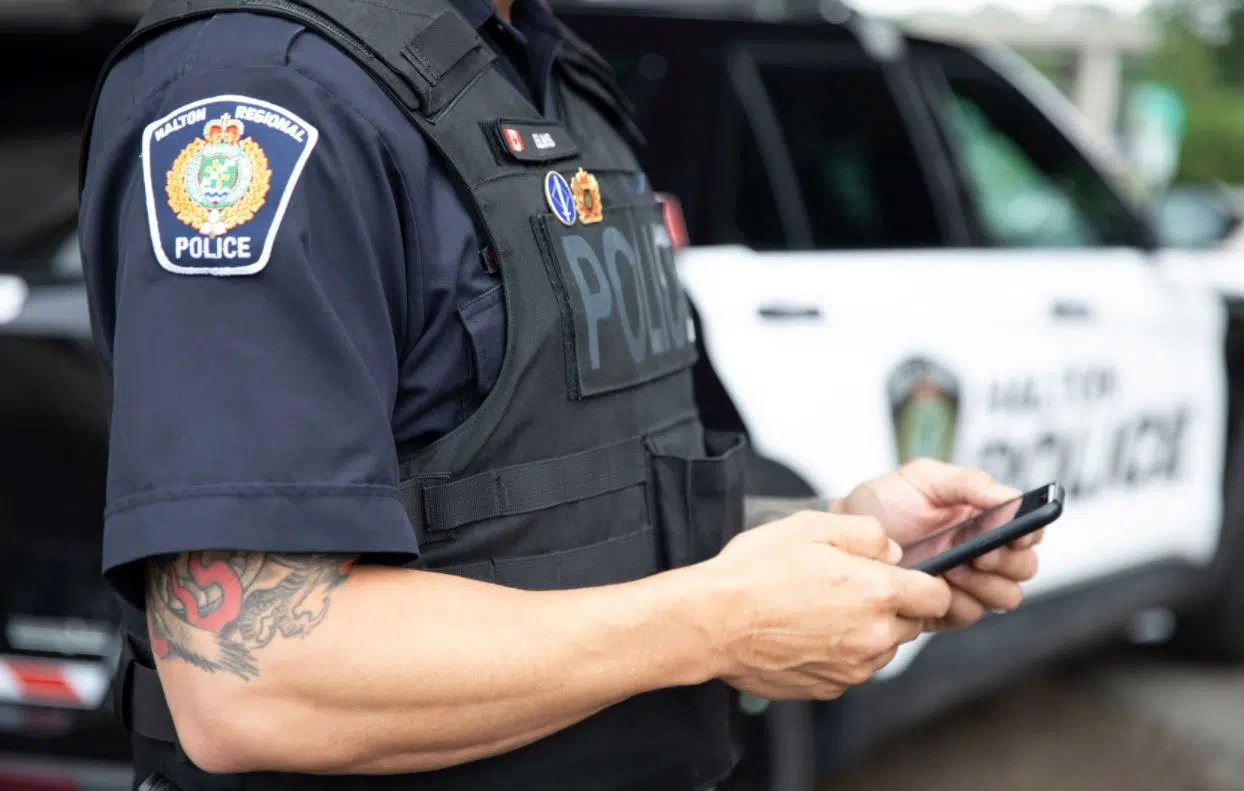
Photo: Halton Police
I’m sure you’ve received a phone call or a text from someone claiming to be from your bank.
March is Fraud Awareness Month and we’re continuing to speak with Detective Constable Derek Gray with the Halton Regional Police Service Elder Abuse and Financial Crime Unit. Our topic this week is the ‘Bank Investigator Scam’. He breaks it down into two separate scams.
If you ended up as a victim to one of these scams, Det. Gray says the best thing you can do first is attend your local branch. He says you can speak with a representative who will help decide the best course of action. That usually means cancelling your debit and/or credit card and getting a new one, as well as putting a hold or a block on your account for all online purchases and transfers. You will then phone the police and file a report and follow the instructions from there.
If someone is able to get ahold of your personal information, whether it’s your credit card, personal address, name date or birth, or social insurance number, the suspect is collecting your identity information and is able to impersonate you online. They can apply for all kinds of credit cards and products with your information.
This will all impact your credit. Det. Gray says there are ways for you to track your credit to make sure your information is being used by someone else.
He adds that residents, especially older adults, need to think more Sherlock Holmes. If you get a phone call from someone proposing to clean your ducts, do research into the company before calling the number back. Last week, we covered the grandson scam. Call family members to confirm that you actually did speak to your grandson and confirm that they actually need financial help. When money is involved, be skeptical and always do your research.
The following are tips to protect yourself from emergency scams:
- If you suspect that you are being contacted by a fraudster call Halton Police at 905-825-4777 or 911 if it is an emergency.
- If you are at the bank, do not lie—tell the bank employee why you are retrieving the cash. The employees are trained to assist you in recognizing possible frauds and will help protect your money.
- Remember: Scammers count on the fact that victims will want to act quickly to help their loved one in an emergency.
- Caution: Never give money to anyone you don’t know and trust. Verify the person’s identity before you take any steps to help.
- Think: Don’t give out any personal information to the caller.
- Investigate: Ask the person questions that only your loved one would be able to answer. Call someone you both know to verify the story. Scammers can learn a lot about you from social media, or while talking to you on the phone.
- Ask yourself: Does the caller’s story make sense?
- Important: Police, lawyers and the court will never ask you to give money to someone at your door.
Anyone with information pertaining to a fraud or any other crime is asked to contact the Regional Fraud Bureau Intake Office at 905-465-8741 or Fraud@haltonpolice.ca.
Tips can also be submitted anonymously to Crime Stoppers. “See something? Hear something? Know something? Contact Crime Stoppers” at 1-800-222-8477 (TIPS) or through the web at www.haltoncrimestoppers.ca.



